#54: Enduring Successful Corporate Cultures
Foreword to the book Berkshire Beyond Buffett by Lawrence Cunningham and published by Deusto and Value School

Warren Buffett is the most studied and admired investor in the history of finance. It is estimated that nearly three hundred books have been written about him and the broader Berkshire Hathaway ecosystem, his renowned investment vehicle. This fascination underscores the depth of Buffett’s thought, which transcends the purely financial realm.
Berkshire stands as a truly singular case—remarkable for both the duration and consistency of its extraordinary results—and has become an essential object of study for any investor, executive, or entrepreneur with a long-term mindset and a commitment to excellence. The text by Professor Lawrence Cunningham, which I have the privilege of introducing, allows us to explore the defining traits that have shaped Berkshire Hathaway’s corporate culture—the most important factor in explaining its six-decade-long record of outperforming the market.
Cunningham, one of the leading experts on Buffett, argues that Berkshire has built a distinctive cultural framework—one that suggests the company may ultimately transcend its founder. This culture was forged through the conduct of Buffett and his partner Charlie Munger over many years, gradually giving rise to a corporate DNA of its own.
Cunningham undertakes the ambitious task of explaining Berkshire’s corporate culture—a term often elusive and open to many interpretations—through the lens of each acquisition made by the Buffett–Munger partnership. The result is a rich mosaic of business miniatures: stories of leadership, enduring enterprises, and excellent businesses capable of standing the test of time. The narrative resembles the case-study method used in leading business schools. In each of these corporate vignettes, Cunningham has the rare ability to highlight those essential cultural elements—the values indispensable to any successful business—as well as the traits that define Buffett’s distinctive leadership and his capacity to identify and attract these small business gems under Berkshire’s investment umbrella. Over decades, Buffett and Munger have thus forged a set of shared values that have crystallized into a recognizable corporate culture.
What most observers associate with Berkshire is its portfolio of publicly traded investments—closely followed by the investment community. Yet the key to its growth, especially in its early years when it operated with a smaller capital base, lies in its private-market investments. In many respects, Berkshire resembles a private equity fund, but with one defining difference: it invests with a permanent-capital mindset. Berkshire is a conglomerate designed to maximize long-term compounding—a “collection” of quality businesses held with an effectively perpetual time horizon. It represents, in its purest form, the culmination of investing without speculating.
I would now like to share three of my favorite moments in Berkshire’s long and illustrious history.
The first is the acquisition of See’s Candies in the early 1970s. This deal was significant because it was the first time Buffett agreed to pay a premium valuation for the quality of a business. Like many of Berkshire’s later acquisitions, See’s Candies was a family-owned company—then in its third generation—that had built a successful franchise manufacturing, distributing, and selling premium chocolates and confections, sustained by a culture of excellence and customer service. By the late 1960s, the company faced an increasingly competitive market and lacked a clear succession plan. The family owners sought to sell for $30 million—slightly less after adjusting for cash on hand—against an operating profit (EBIT) of $4.2 million and a net profit of $2 million. These multiples were well above the levels Buffett was accustomed to paying.
At this point, Munger—whose role in Berkshire’s architecture has been essential—convinced Buffett that the price was justified by the company’s exceptional quality: See’s enjoyed a gross margin of over 50%, reflecting its strong pricing power, and had substantial room to grow beyond the few Midwestern states where it operated at the time. That potential required very little additional capital investment.
The deal was completed on the family’s terms.
During the following decade, See’s Candies became Berkshire’s most profitable investment, achieving annualized earnings growth of 20% in a challenging environment of weak economic expansion and high inflation. Buffett would later admit that the price paid for the company was, in hindsight, low. Beyond the handsome dividends See’s paid Berkshire over the years—estimated at $1.7 billion—the true legacy of this acquisition was the shift toward quality that would define Berkshire’s future deals, encapsulated in the now-famous credo: “It’s far better to buy a wonderful company at a fair price than a fair company at a wonderful price.” This principle lies at the heart of Berkshire’s culture.
The second key moment was the acquisition of Wesco Financial, also in the 1970s. Wesco was a financial institution—not unlike a savings and loan association—serving U.S. military veterans. It was a traditional enterprise with a culture of prudence in risk management and long-term stewardship, owned by the Casper family. Blue Chip Stamps, Charlie Munger’s personal investment vehicle (partly owned by Berkshire), held an 8% stake in Wesco when, in 1973, a merger was proposed with the Santa Barbara Financial Corporation (CFSB). Although CFSB appeared similar on paper, it lacked Wesco’s solid balance sheet and high-caliber management. Buffett and Munger objected to the merger terms, believing that Wesco was being undervalued and CFSB overvalued. They persuaded the Casper family to withdraw from the merger and consider alternative growth options.
The announcement caused Wesco’s stock to drop from $18 to $11 in a matter of days—a situation many investors would have exploited to buy at a deep discount. Instead, Munger and Buffett, aware that their own intervention had triggered the decline, placed buy orders at $17 per share—above the market price. Ultimately, Blue Chip, with Berkshire’s financial backing, acquired up to 80% of Wesco Financial, stabilizing its shareholder base and convincing its capable management team to remain in place.
Why pay a premium? Buffett and Munger used the episode to send a powerful message about how they preferred to invest: paying fair prices for great businesses, operating with a long-term owner’s mentality, and supporting honest, competent managers. It was, in essence, a premium for integrity. Over time, this approach made the Omaha-based conglomerate the preferred “white knight” buyer for business owners seeking a trustworthy and enduring home for their life’s work.
Finally, and also related to the value of integrity, I must mention Berkshire’s involvement with Salomon Brothers—perhaps my favorite Buffett investment, given its many dimensions. In 1987, amid the Wall Street takeover boom, Berkshire acquired a 12% stake in Salomon, one of America’s leading investment banks, replacing its principal shareholder, Minorco. Once again, Buffett acted as a white knight, supporting the management team led by the idiosyncratic John Gutfreund and shielding the firm from short-term oriented investors. In exchange for maintaining the leadership team and providing shareholder stability, Buffett negotiated 9% preferred shares convertible into common stock over time.
What appeared to be a steady investment soon turned into a major crisis: four years later, Salomon became embroiled in a high-profile scandal involving price manipulation in the U.S. Treasury auction market. As the firm’s largest shareholder, Buffett was forced to step in as interim chairman to navigate the storm. He swiftly reorganized the board and senior management, surrounding himself with individuals of unimpeachable integrity to restore the firm’s reputation.
The defining moment came on September 4, 1991, when Buffett testified before the U.S. Congressional subcommittee investigating Salomon’s misconduct. Fully aware of the gravity of the situation, he began by apologizing to Congress and to the American people on behalf of the firm and its employees. He pledged full cooperation to identify those responsible and to protect the many within Salomon who had acted honorably. His testimony culminated in a timeless lesson on corporate ethics: “Lose money for the firm, and I will be understanding; lose a shred of reputation for the firm, and I will be ruthless.”
It was a defining Buffett moment—one that not only marked the beginning of the end of the Salomon crisis, but also left an indelible imprint on Berkshire Hathaway’s corporate culture.
When it comes to culture, as in life itself, one is ultimately known by one’s deeds.
Enjoy your reading.
Luis Torras
Barcelona, May 27, 2024
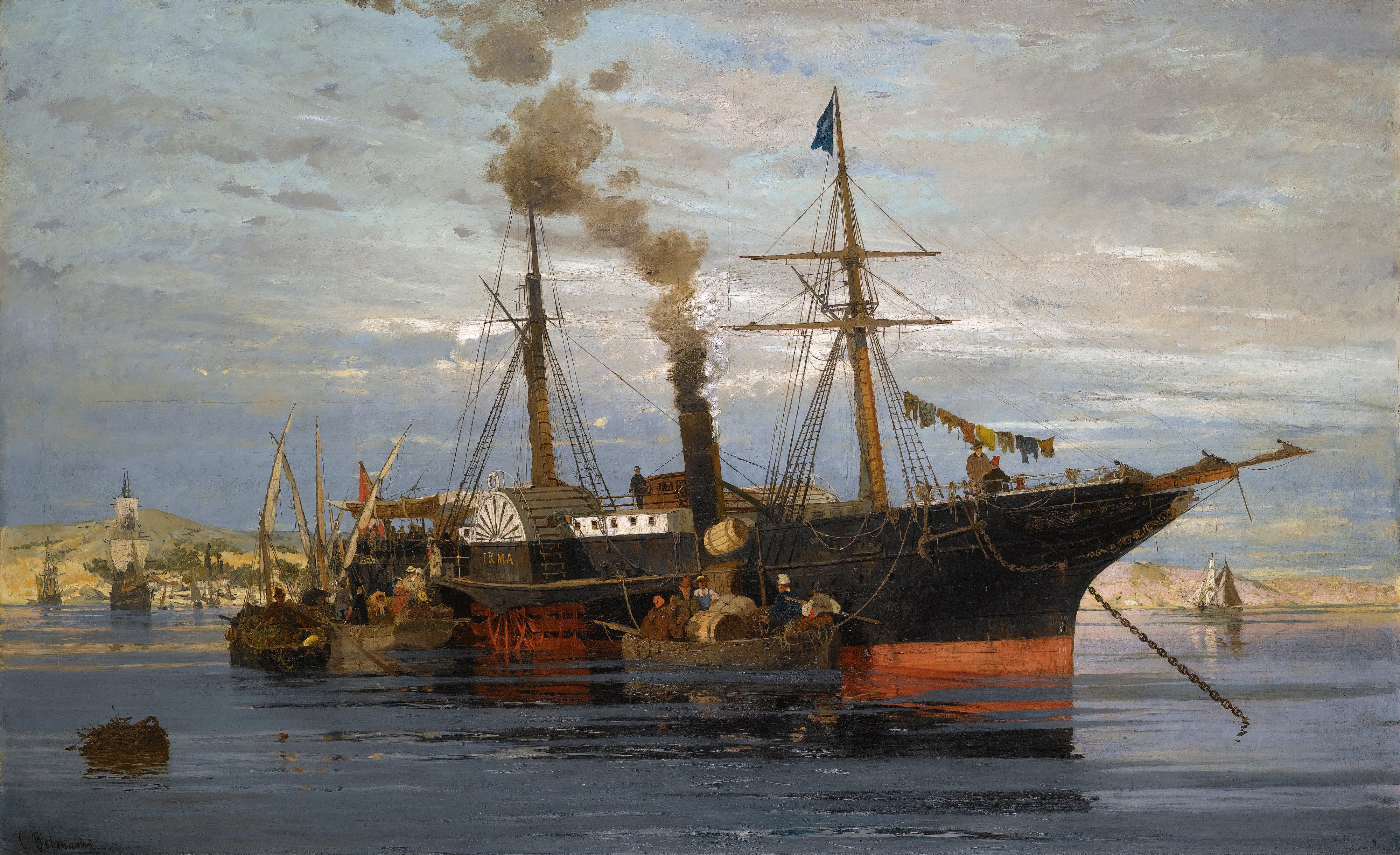
Credits paint in the frontispice: Konstantinos Volanakis, The Departure (1877)
Beautifully written foreword! The three moments you selected perfectly illustate Berkshire's cultural evolution. The Wesco Financial story is particularly powerful - paying above market price to honor their own integrity is the kind of decision that compounds reputationally over decades. It's exactly this behavior that made Berkshire the preferred acquirer for family businesses. The Salomon Brothers testimony remains one of the most important corporate governance moments in modern finance. Buffett's 'lose money vs lose reputation' dichotomy should be mandatory reading in every MBA program.